In the middle of Place du Jeu de Balle, among the market stalls of the flea market, a concrete slab marks the presence of something most people walk past without noticing: an underground air raid shelter built during the German occupation in WWII.
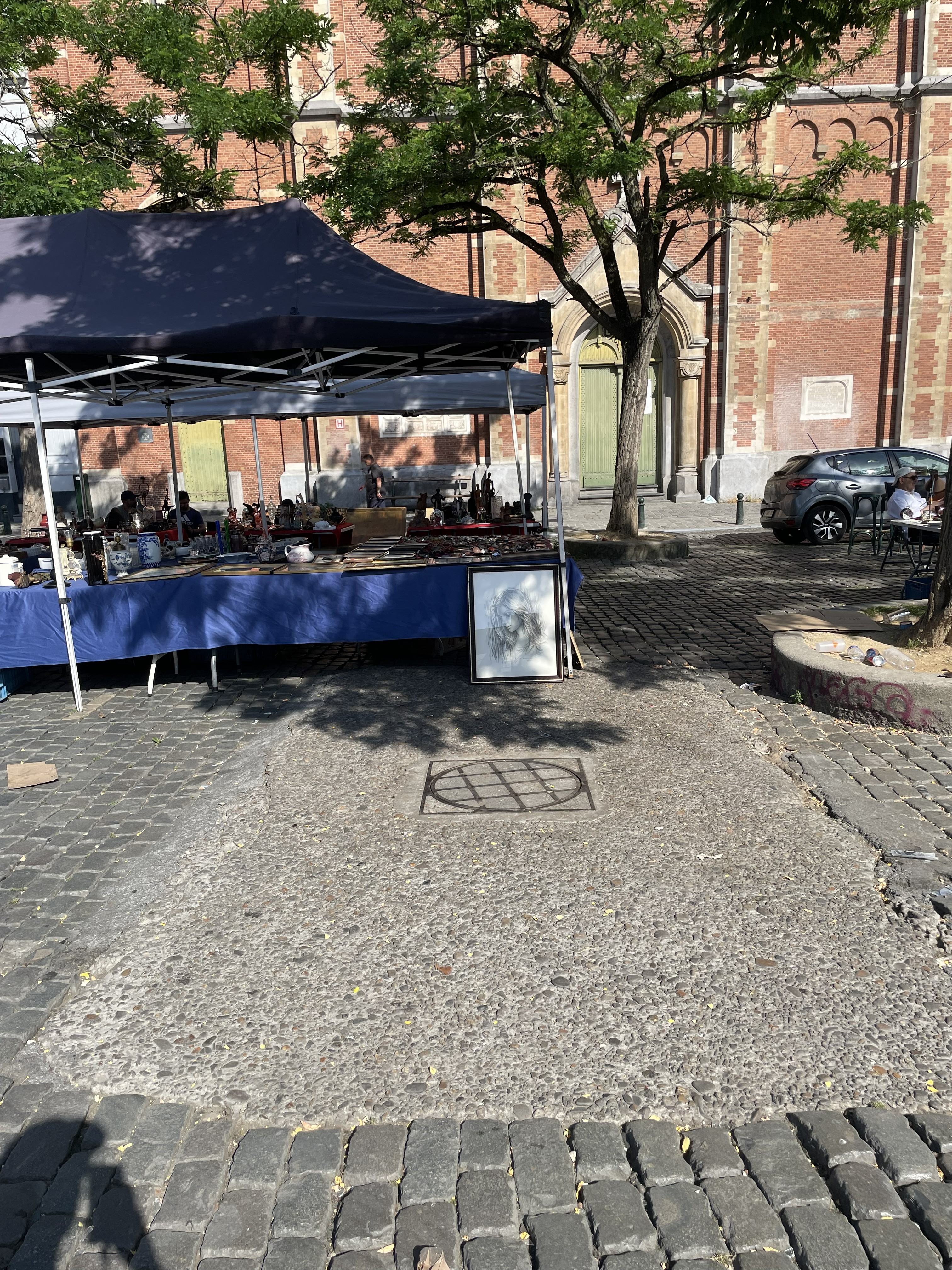
Since Occupied Brussels started, this concrete slab has become one of the most popular parts on our itinerary. Even though guests cannot see the interior for themselves, they still find it to be a tangible proof of how much bombing the city actually endured during occupation.
As a Brussels resident and someone passionate of history, however, I must admit that it stings every time a guest asks me why it seems to be so forgotten. It is not the place nor the intention of Occupied Brussels to say whether this shelter should be opened for the public, but I think it is our responsibility to at least try and bring it back to light.
But how?
We have reached out to urban explorer Sylvain Margaine whom a few years ago managed to visit the shelter personally and take a remarkable series of photographs. Thanks to his support and the assistance of AI tools, we have started creating a digital reconstruction of the shelter.
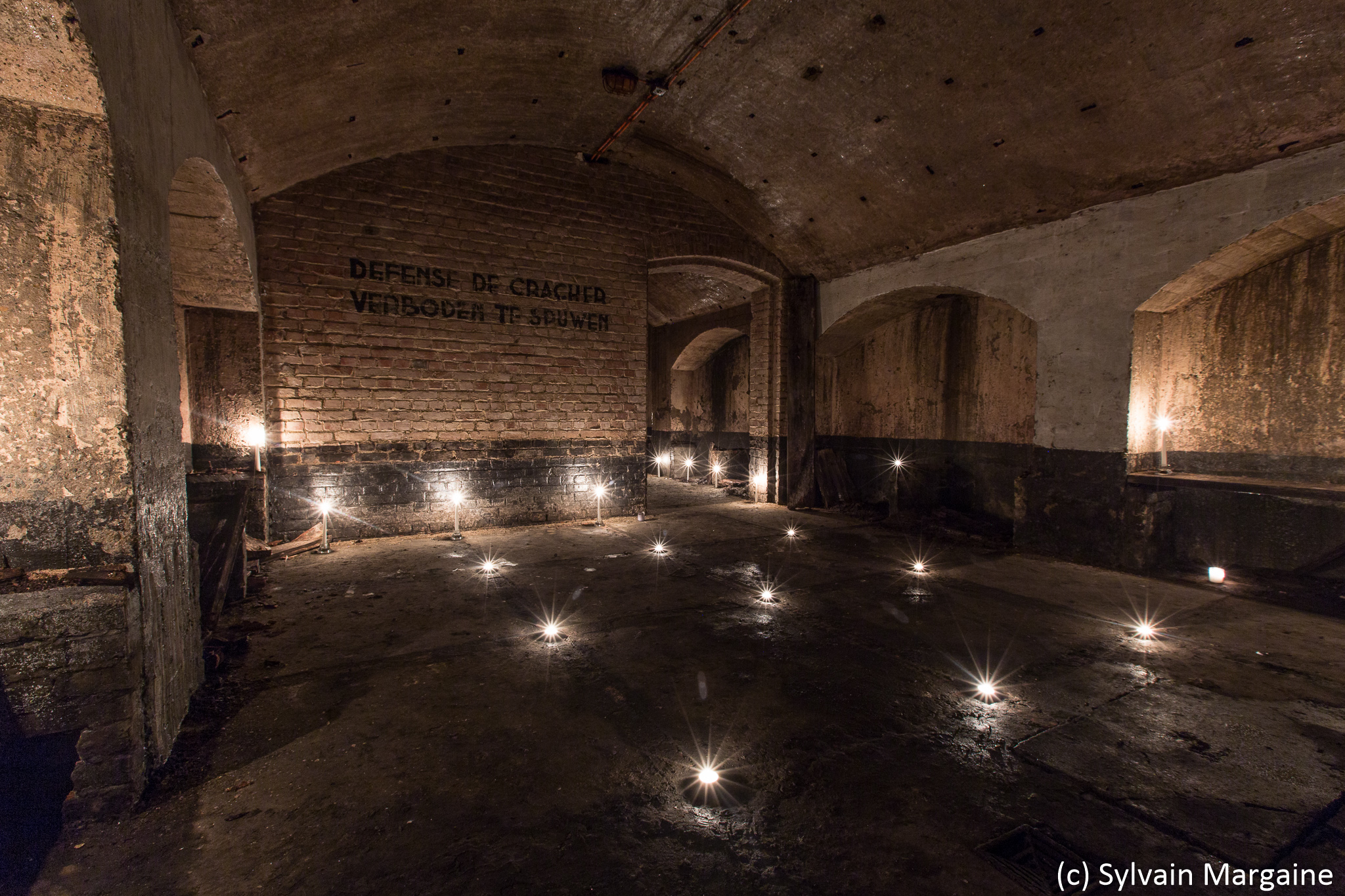
The goal is to make this digital version available to anyone passing through Place du Jeu de Balle. Visitors would be able to scan a QR code on a discreet memorial plaque near the site and discover what lies beneath their feet.
Doubtless, this proposal will require coordination with the authorities, heritage services and local stakeholders in the Marolles. We hope they will see the value that such a modest intervention could bring to the historical memory of the neighbourhood and to the wider heritage of Brussels.
Do you want to join the project?
A crowdfunding campaign is being prepared to support the creation of the plaque, the QR-linked digital experience, and the historical material that will accompany it. The list of contributors will be permanently added to this article, as a way of saying thank you.
Below, you can see the beta version of the digital experience. We would be grateful to hear what you think.
Beta version of the digital experience